Post
Lessons on Product Culture and Product Discovery
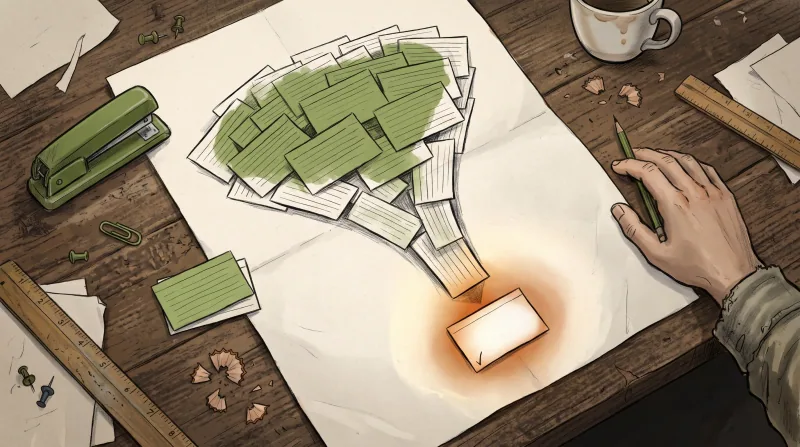
Design methodologies evolve quickly, and today there is a lot of talk about product culture, discovery, product design and product management. This article will help you understand these topics.
I currently work at a SAAS (Software as a service) company in the lawtech or legaltech segment, and when I joined in 2017 we were in a period when we still talked about UX and UI. Over the years we came across the book Inspired: How to Create Tech Products Customers Love, and then we started diving into this idea of "Product". For that I studied the book and began following the channels that dealt with the subject, until we understood that qualitative and quantitative research could be mediated by an important role, Product Management, which should lead the Discovery process.
This book now has a Portuguese edition titled Inspirado: Como Criar Produtos De Tecnologia Que Os Clientes Amam.
To explain it briefly, Discovery is a strategic stage where the Product Manager should carry out investigations inside and outside the company in order to build a list of items with a high chance of being used, that bring profit and contribute to the growth of the business.
With the product manager we can have a more strategic view of what we should build in each development period, and through Discovery we begin to get closer to customers.
As a Product Designer, my role is to support and facilitate qualitative and quantitative research techniques and to understand customers' pains and the strategies we will adopt to solve the problems, considering business, legal, technological, cultural, behavioral and deadline constraints.
When a problem is chosen to be solved, the process I have been working with generally has the following stages:
-
Immersion
-
Ideation
-
Prototyping
-
Testing
-
Adjustments
-
Pitch writing
-
Development
-
Team follow-up
-
Lessons from the released feature
This is really similar to other approaches, but what I learned was that product culture, through the product manager's role, brought a consolidation of the activities of project management, user research, Design Thinking, Service Design and others, that is, a more holistic view of the product.
What changes day to day is that, as a designer, I can work alongside the Product Manager supporting Discovery and understanding customers' pains, while focusing on qualitative and quantitative research techniques, facilitation of interactions with stakeholders, usability and design. This helps a lot, because most of the time what will be worked on really makes sense from the standpoint of desirability (customers want to use it), sustainability (it makes financial sense) and feasibility (it can be built within the existing constraints). I say this because it is very common for features with no market fit to be built nonstop at tech companies without bringing value to people.
To understand what some Product Management experts say, let us look at a few quotes.
"Product Management is the area responsible for connecting the company's strategy with customers' problems and needs through software. It must, at the same time, help the company reach its strategic goals while solving customers' problems and needs".
Joaquim Torres
"The Discovery track is about quickly generating validated items for the Product Backlog, and the Delivery track is about developing software in a way that puts it in users' hands as fast as possible".
Marty Cagan
Product Delivery is the process of building, in a Lean way, what was found in Discovery. According to Cagan, it is also necessary to always assess the risks of Value, Usability, technical Feasibility and Business, and we need to find out whether:
-
Are we working on a real problem?
-
Is there demand?
-
Do we know the problem well enough?
-
Do users see enough value to use it or buy it?
Another fundamental concept of product culture is to pursue Outcomes (results) instead of Outputs (deliverables).
"At the end of the day, your job is to minimize output and maximize outcome and impact".
Jeff Patton
User Story Mapping
About the product area, it can be understood as being responsible for all aspects of a product, from strategic goals to the user experience, throughout the product's whole life, from conception to the end.
An important part of this process is measuring results through qualitative and quantitative metrics, that is, after a product is delivered it is necessary to track its performance and consumers' impressions.
Of course all of this is commonly challenging. I think these methodologies need adaptation and maturing within each company's process, and that the first step to evolving this process is to study it and try to build a little at a time within the product team. Obviously the intention can come from managers or from the team, and each context has its own challenges.
Another important point is that the product approach should run on a track of continuous discovery and continuous delivery. That is, while the Product Manager is working on the discovery of what has already been delivered and of what will go into development in the next period, there should be an autonomous product team (developers, designers, quality analysts) iterating and learning from the partial deliveries of the product, running usability tests, for example, in production (an online system available to customers). This is also called Dual Track Agile.
Image source: https://aktiasolutions.com/product-discovery/
The goal of Discovery is to learn fast, not to validate hypotheses. Hypotheses must be validated with the product in customers' hands, in a real scenario. After a feature is launched, Discovery continues through research, and finally the hypotheses can be validated.
Links to learn more about Product:
https://www.cursospm3.com.br/blog/
https://uxdesign.cc/introducing-dual-track-agile-27a23d12268b